
Search Ohio Released Inmates
Ohio keeps released inmates records at the state and county level. You can search for free online. The Ohio Department of Rehabilitation and Correction runs an offender search that covers all 26 state prisons. It shows who is locked up now. It also shows who got out and who is on parole or post-release control. County jails post their own rosters too. Ohio has 88 counties, and each one stores booking and release data for its own jail. Start with the ODRC search if you need a name. Or check the county where the arrest took place. This page covers how to look up released inmates across Ohio.
Ohio Released Inmates Overview
Search Ohio Released Inmates Online
The ODRC Offender Search is the main tool for finding released inmates in Ohio. It is free. The search covers every state prison. You look up people by last name, full name, or six-digit offender number. There are filters for county of commitment, zip code, and next parole board hearing too. Each result pulls up a full profile. You get the inmate's name, mugshot, criminal history, sentence details, and the facility where they are held. For released offenders, it shows discharge terms and dates. Female inmates have numbers that start with "W" while male inmates use "A" or "R" as a prefix.
The ODRC Offender Search page is where you start a lookup for any Ohio state released inmate.
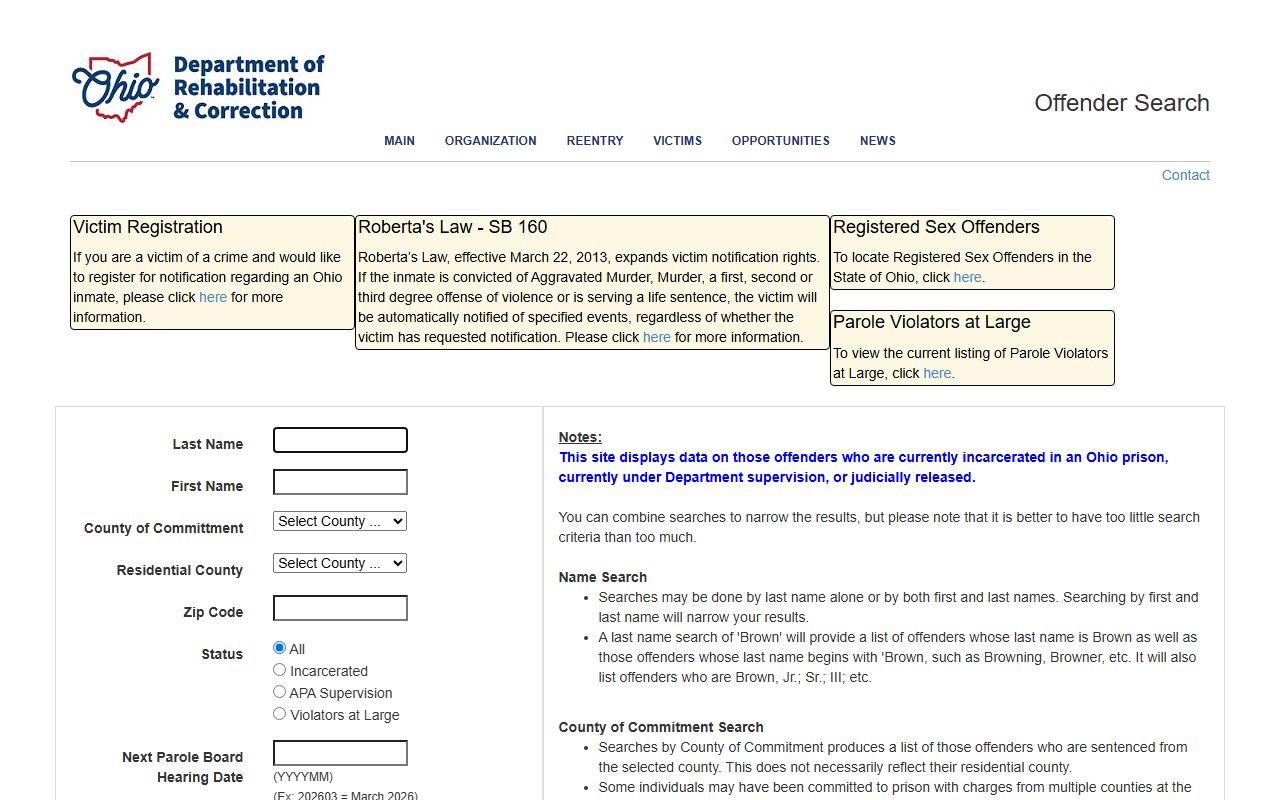
Search results show names, booking photos, criminal history, and details about the holding facility. You also see the probable release date and parole board hearing schedule for current inmates. The ODRC updates this data as offenders move through the system.
Ohio runs a second portal at ohio.gov that points to the same search tool. It notes that the state system only tracks prison inmates. For county or city jail data, you need to go to the local sheriff.
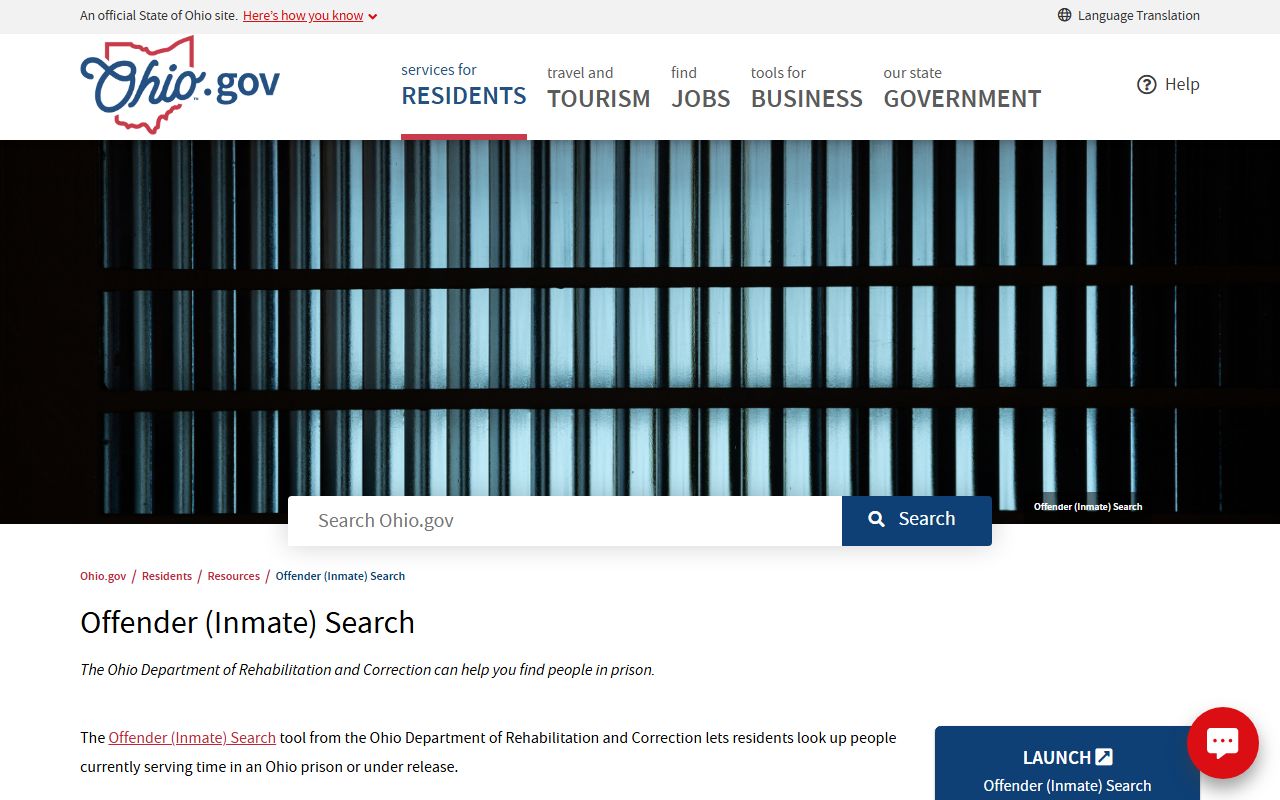
The state portal tells users that having too little search criteria works better than too much. Start broad. Add details only if you get too many results back.
Ohio Released Inmates Database
The ODRC runs one of the most complete inmate databases in the country. It tracks people from the day they enter state custody until they finish their full sentence or supervision. Records show the inmate's full name and any known aliases. You see date of birth, height, weight, hair and eye color, race, and physical markings like scars or tattoos. The system logs conviction details with charges, arrest info, and the county of commitment. Sentence data includes the length of the term, date of admission, probable release date, and court details. For released inmates, it lists the terms of discharge, transfer dates, and supervision status.
The ODRC homepage gives access to offender data and facility details across Ohio.
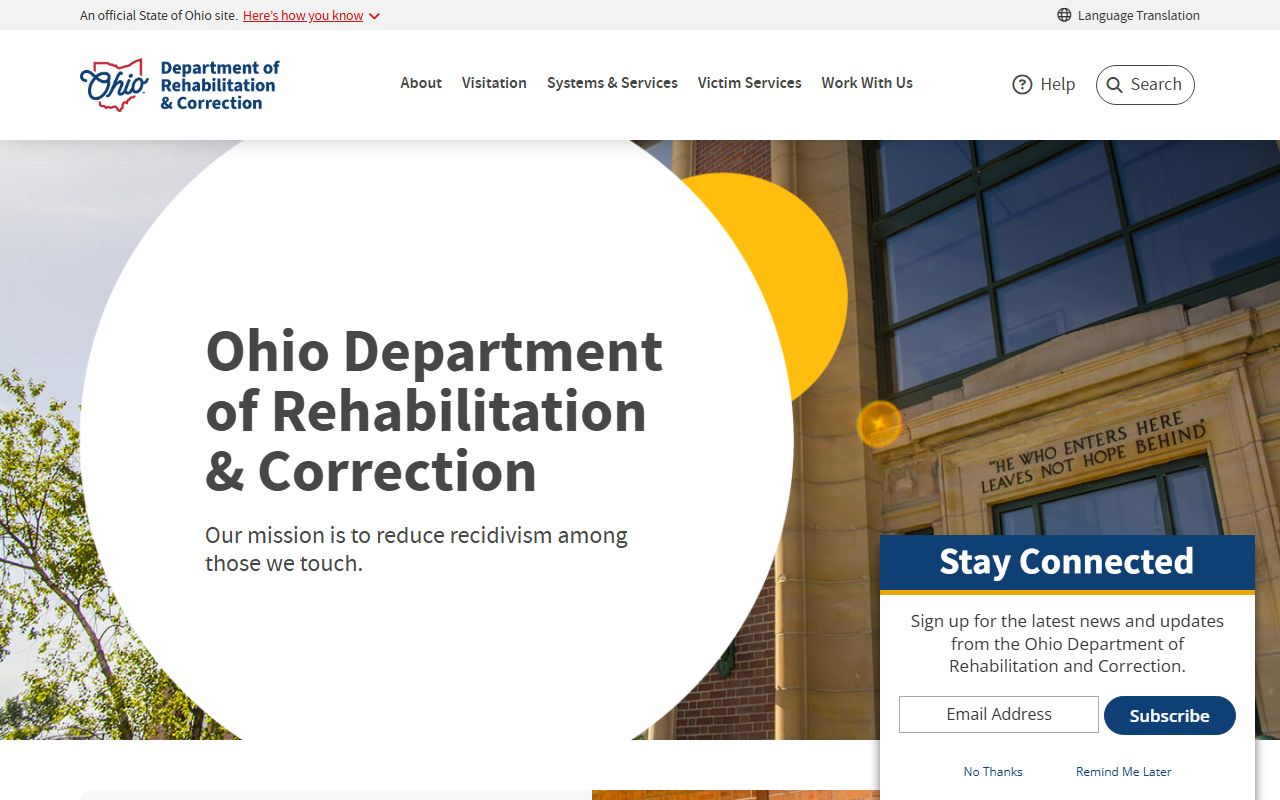
The site also has visiting hours, contact info for each prison, and general visitation guides. The ODRC mission centers on reducing recidivism among the people they serve. They run programs at each facility for inmates before and after release.
Bail and bond info shows up in the records too. So do parole hearing dates and disciplinary history. If someone moved from one prison to another, the transfer log is part of their file. This level of detail helps you track where a released inmate went and when they got out.
Ohio Inmate Records Laws
Ohio's public records law sits in Ohio Revised Code Section 149.43. It sets the rules for who can see government records and how to get them. Any person can ask for public records. You do not need to give a reason. You do not need to show ID. The office must hand over records promptly during regular hours. Copies come at cost. But inmate records have extra limits. Under ORC Section 5120.21, files at the ODRC are not fully open to the public. The department can only share basic facts: the inmate's name, convictions, photo, supervision status, places of incarceration, and disciplinary history. Medical records, security data, and victim impact statements stay sealed.
The full text of the Ohio Public Records Act is posted at the Ohio Revised Code site, shown here.
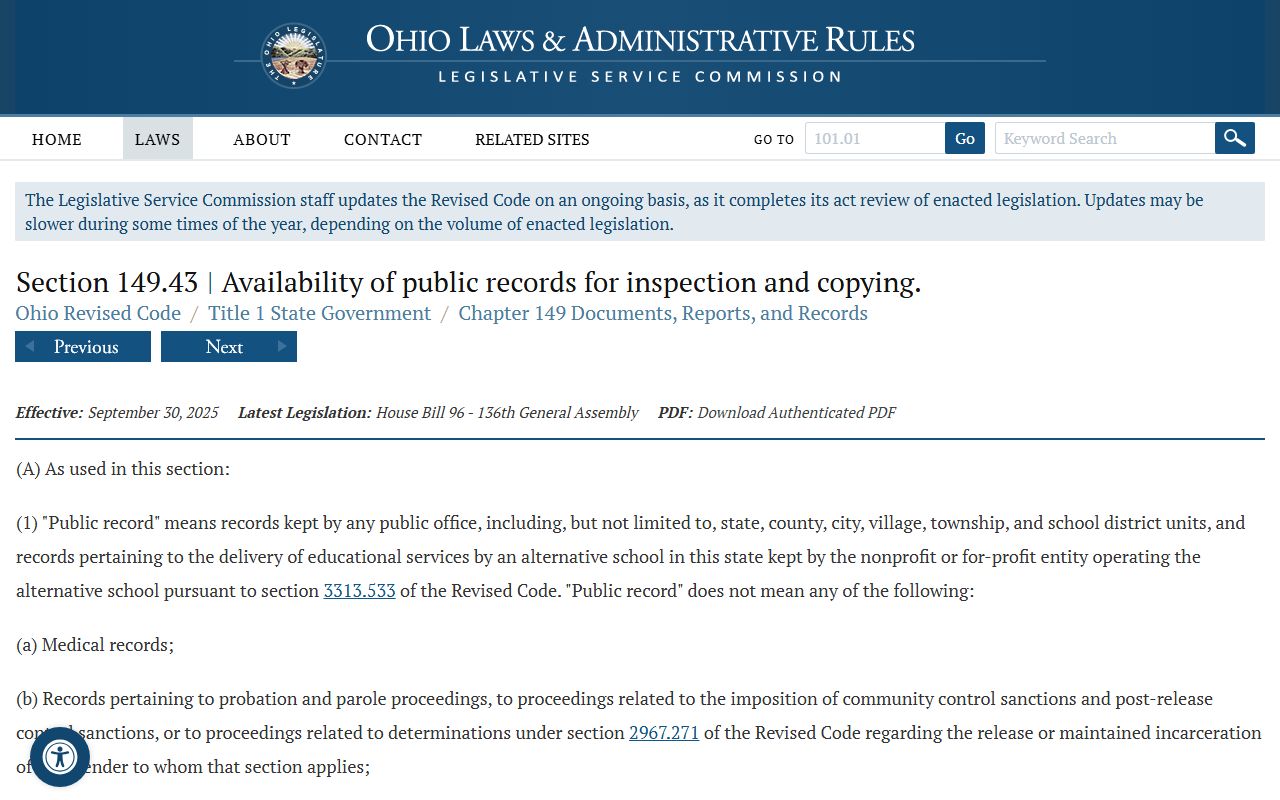
This law applies to every government office in Ohio. It covers state, county, city, village, township, and school district records. If a request is too vague, the office can ask you to narrow it down. They cannot require you to state who you are or why you want the records. If they deny a request, they must give you a written reason citing the legal authority behind the denial.
The separate statute for inmate records at the ODRC is ORC Section 5120.21, shown below.
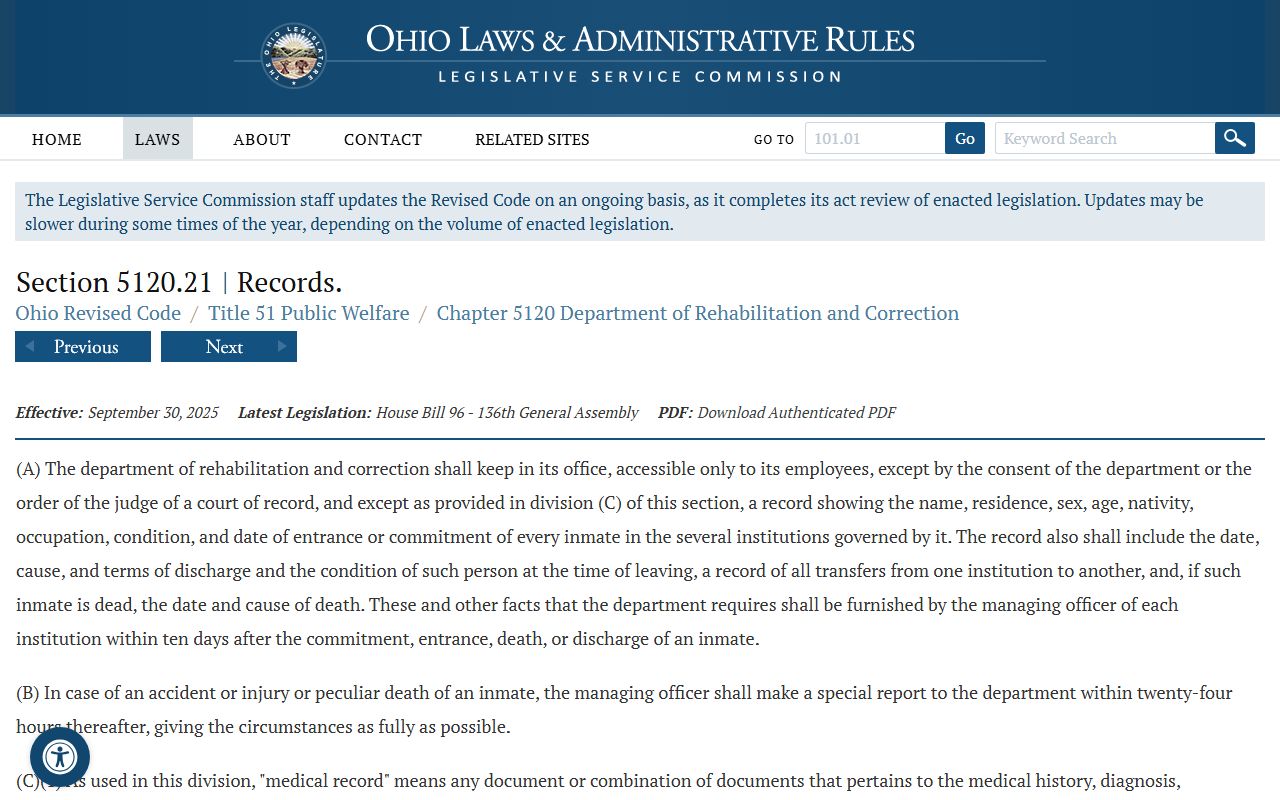
It spells out what the department must keep on file for every inmate: name, residence, sex, age, occupation, date of entry, and the date, cause, and terms of discharge. Medical records are kept in a separate file and can only be released with written consent from the inmate and a licensed attorney or physician.
Note: Public records requests for released inmates data can be sent to the ODRC or to the county sheriff's office that made the original arrest.
Types of Inmate Release in Ohio
Ohio has several ways an inmate can get out. Parole is the most common for state prisoners. Under ORC Section 2967.01, parole means a release from prison by the Adult Parole Authority. The person stays under supervision. They must follow rules. If they break those rules, they go back. A "parolee" is anyone released on parole who has not yet received a final release. "Final release" means the Adult Parole Authority has ended the balance of the sentence.
Post-release control works like parole but applies to a different group. It is a supervision period after a prison term ends. The Adult Parole Authority monitors the person and can impose sanctions for violations. A "releasee" is someone serving a post-release control term. These terms are set by the court at sentencing.
The definitions for parole, pardon, and other release types are in ORC Section 2967.01, shown here.
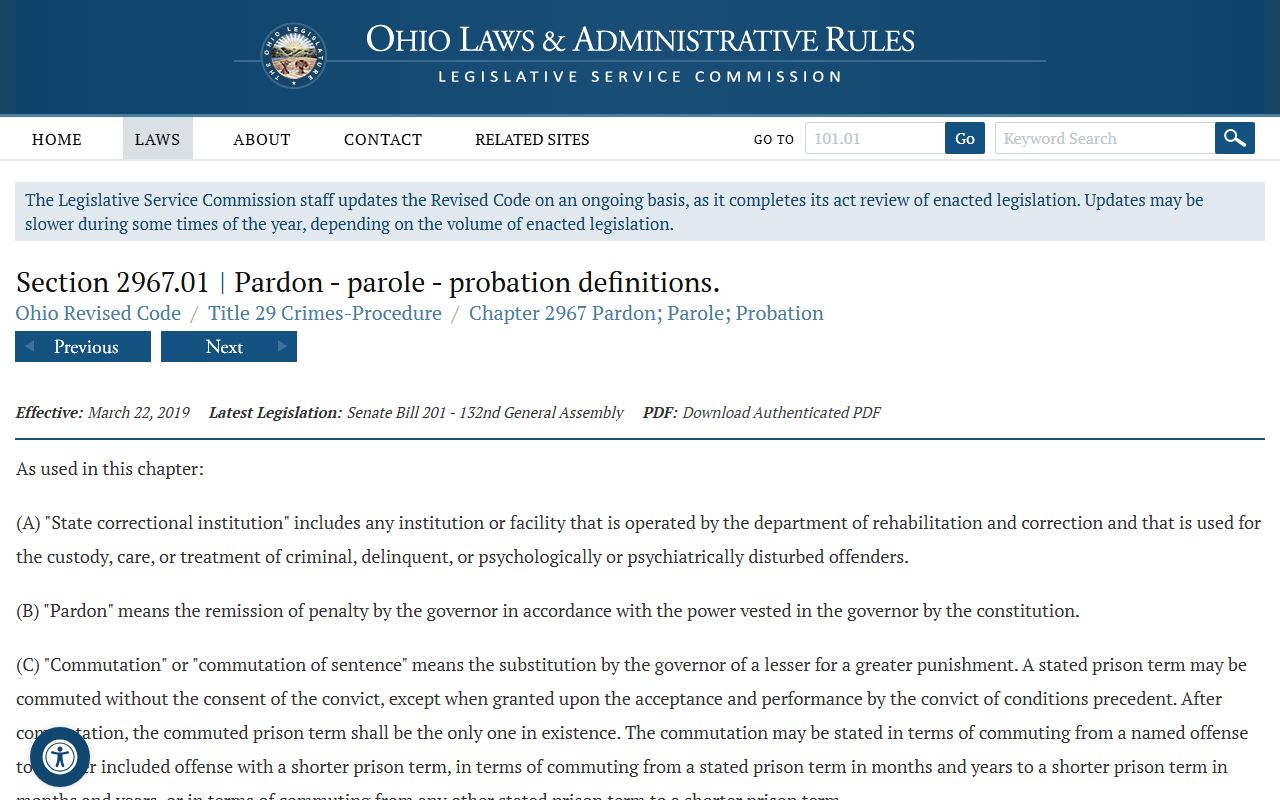
The statute also defines reprieve as a temporary suspension of a sentence by the governor. A commutation swaps a longer punishment for a shorter one. An administrative release ends jurisdiction over a sentence for administrative reasons.
Community control is a separate path. Under ORC Section 2929.15, a judge can sentence a felony offender to community control rather than prison. It lasts up to five years. A probation department handles supervision. If the person leaves the area without permission or picks up new charges, the court can revoke it and impose a prison term instead.
The community control sanctions statute is at ORC Section 2929.15, shown below.
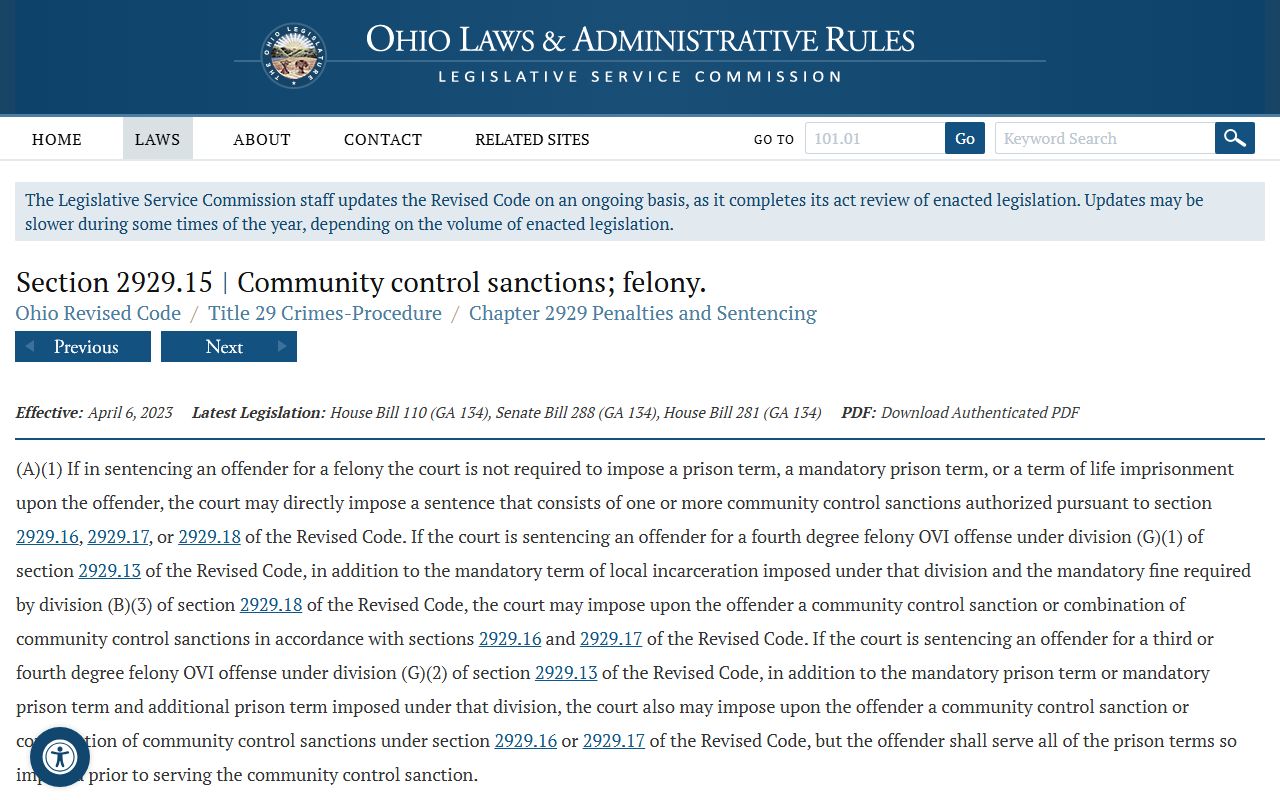
Technical violations of fifth-degree felonies can lead to up to ninety days in prison. Fourth-degree non-violent felony violations cap at one hundred eighty days.
Ohio Multi-County Jail Rosters
Some Ohio counties share jail data through regional portals. The Miami Valley Jails system is the biggest one. It covers jails in Butler, Montgomery, Clark, Greene, Warren, Brown, Darke, Fayette, Highland, Hancock, Miami, Preble, Ross, and Kettering. Data updates every 30 minutes for most of these jails. You can search by last name or browse the full roster at each facility. Each listing shows the inmate's charges, booking info, facility name, and phone number.
The Miami Valley Jails portal gives real-time access to inmates across southwestern Ohio counties.
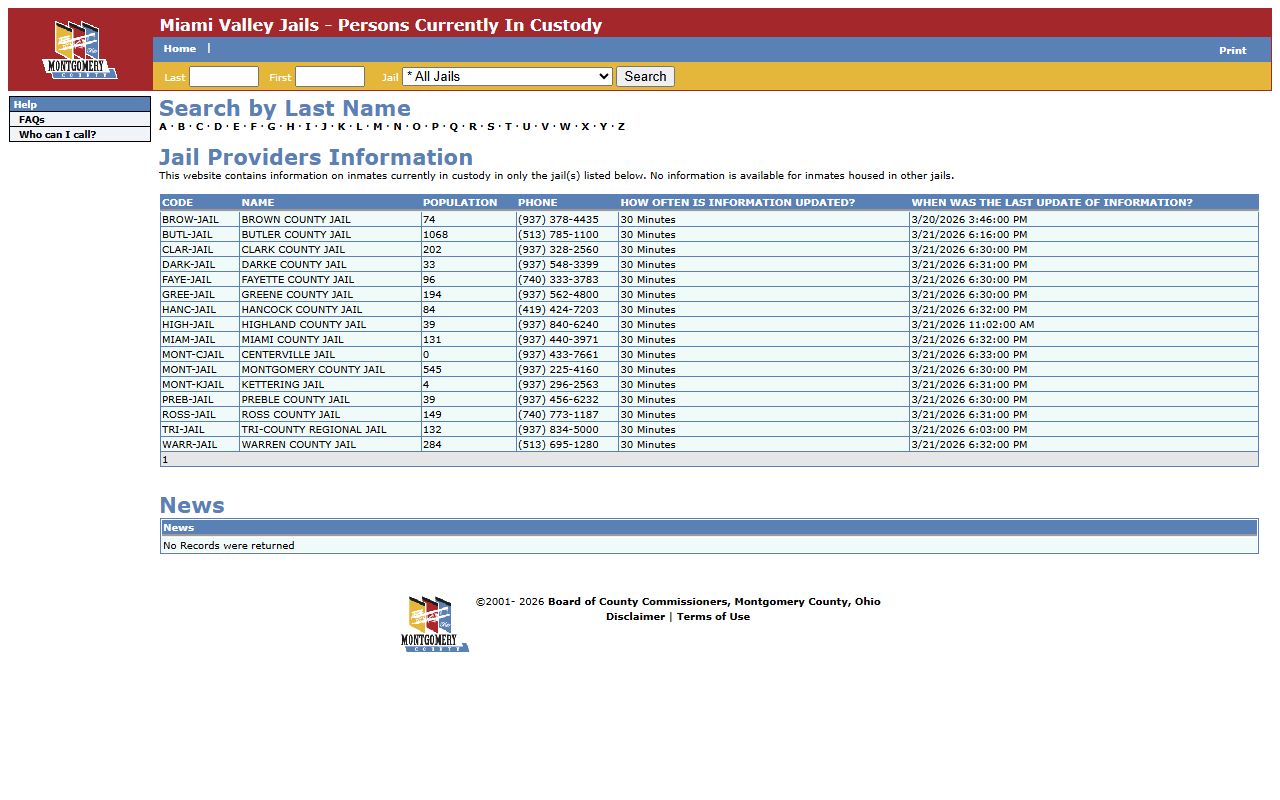
Population counts are listed for each jail. As of recent data, Butler County Jail held 1,051 inmates. Montgomery County had 541. Warren County had 272. Clark County had 193, and Greene County had 195. These numbers shift daily as people are booked in and released.
Other parts of Ohio have regional jails too. The Southeast Ohio Regional Jail covers Athens, Fairfield, Hocking, Jackson, Morgan, Perry, and Vinton counties. The Tri-County Regional Jail serves Champaign, Madison, and Union counties. The Corrections Center of Northwest Ohio handles Fulton County and nearby areas. Each of these systems keeps its own roster of current inmates.
Ohio Criminal Background Checks
The Ohio Attorney General's Bureau of Criminal Investigation runs the state's background check system. A check costs $22. You need the person's full name, a valid address, a complete set of fingerprints, and a signed consent form. Minors must have a waiver from a parent or legal guardian. Payment goes by money order, electronic payment, or business check to the Treasurer of the State of Ohio.
The Attorney General's BCI page outlines how to request a criminal records check in Ohio.

BCI has four offices: London (1560 State Route 56 SW), Bowling Green (750 North College Drive), Richfield (4055 Highlander Parkway), and Youngstown (20 W. Federal Street). Electronic fingerprint submission is also an option through licensed providers across the state. BCI offers a WebCheck Letter Verifier so you can confirm a result that shows no criminal record.
Ohio Released Inmates Notification
VINE is a nationwide victim notification system that works in Ohio. It tracks custody changes for inmates in county jails and state prisons. Anyone can sign up. You pick an offender and choose how you want to be notified. Options include phone call, text message, or email. When the inmate's status changes, you get an alert. That includes release from custody.
The VINE Link site lets you track an Ohio inmate and register for release alerts.
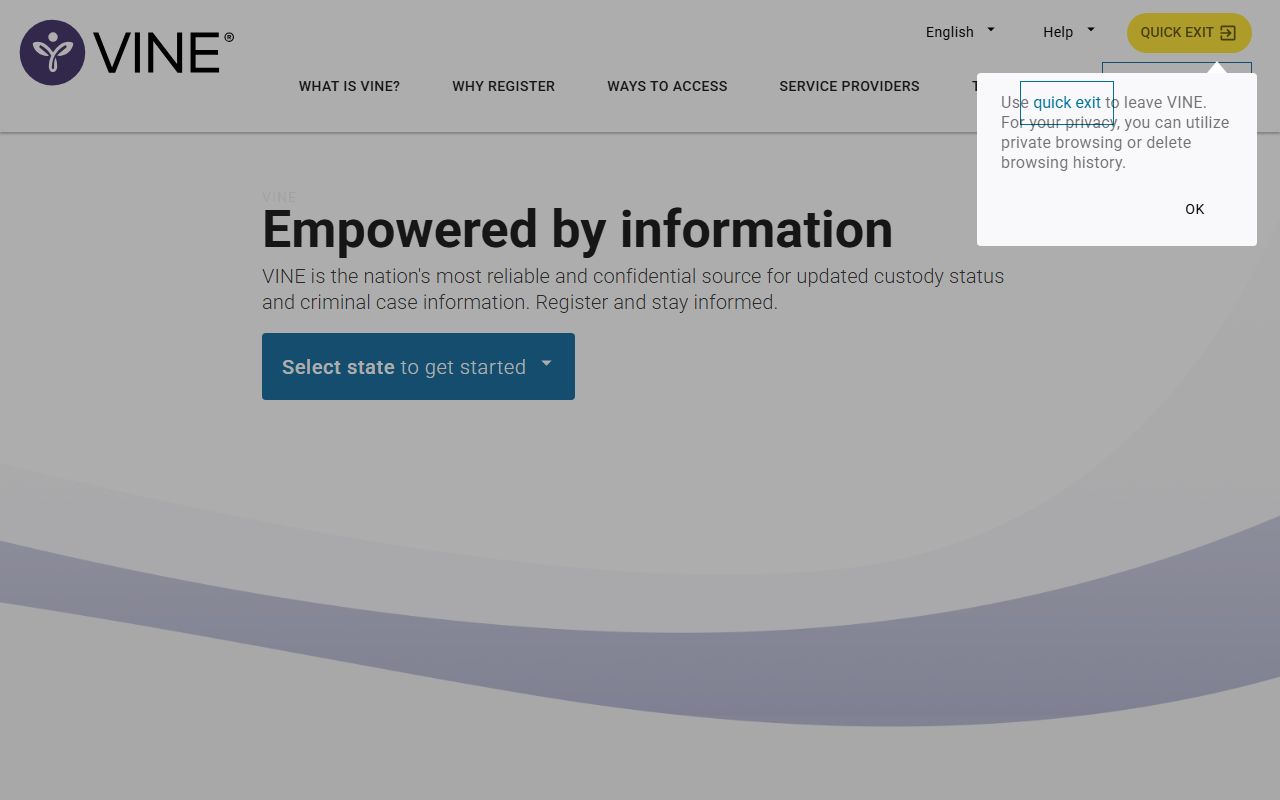
The service is free. It runs around the clock. VINE covers 48 states and over 2,900 jails and prisons. In Ohio, both county jails and state prisons are part of the network. You just need the offender's name or ID number to get started.
Ohio Courts and Inmate Records
The Ohio Supreme Court sits at the top of the state court system. Below it are courts of appeals, common pleas courts, municipal courts, and county courts. Each county has a Common Pleas Court that handles felony cases. Municipal courts take care of misdemeanors. Case records from these courts show the charges, the conviction, and the sentence that put someone in jail or prison. When the sentence ends, release records become part of the case file too.
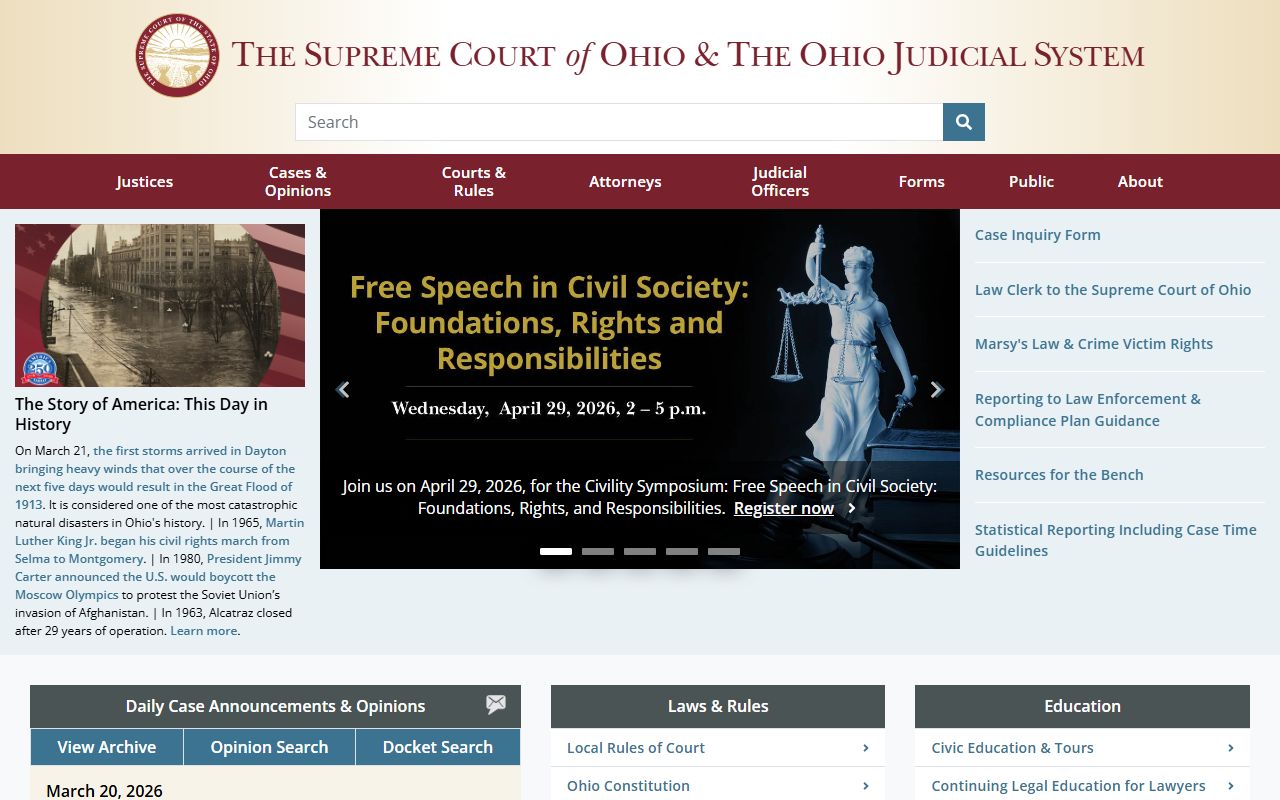
The Ohio Supreme Court website links to court records and legal resources statewide.
The Ohio Criminal Sentencing Commission is another good resource. It tracks how sentencing laws change over time. The commission provides guides on post-release control, community control, and how sentences are calculated. If you want to understand why a released inmate got out when they did, this is where to look for the rules behind the math.
Note: County clerks of courts keep criminal case files with charges, court dates, and disposition records that tie directly to inmate release information.
Browse Ohio Released Inmates by County
Each of Ohio's 88 counties has its own sheriff's office and jail system. County jails track bookings, current inmates, and releases at the local level. Pick a county below to find released inmates resources, contact info, and search tools for that area.
Released Inmates in Ohio Cities
City police departments make arrests, but county jails handle the booking and custody. Each city page below shows which county processes released inmates for that area and where to search for records.