
Access Toledo Released Inmates
Toledo released inmates records are held by the Lucas County Sheriff's Office and the Ohio Department of Rehabilitation and Correction. Toledo sits in northwestern Ohio along Lake Erie. The Toledo Police Department makes arrests in the city, and inmates go to the Lucas County Jail or the Corrections Center of Northwest Ohio. You can search for released inmates for free through county and state databases. This page covers all the tools and offices that handle released inmates data in Toledo.
Toledo Overview
Toledo Released Inmates Jail Records
The Lucas County Sheriff's Office runs the county jail where Toledo arrestees are held. The sheriff's office is at 1622 Spielbusch Avenue in Toledo. Phone: (419) 213-4900. The jail holds people on misdemeanor and felony charges. When someone posts bail, finishes their sentence, or gets transferred, the release goes into the booking record.
Toledo police also use the Corrections Center of Northwest Ohio for some inmates. This regional facility handles overflow and specific types of cases. Both the county jail and the regional center keep booking records that track the full cycle from arrest to release. Records include the person's name, charges, arrest date, bond amount, and release date.
Lucas County is one of the larger jail systems in northwest Ohio. Toledo makes up the bulk of the intake. The sheriff's office can confirm whether a person is in custody or has been released if you call or visit in person.
How to Find Toledo Released Inmates
Start with the Lucas County Sheriff's website. Look for their inmate search or jail roster section. You type in a name. The system shows booking info, charges, and status. For people already released, you may need to call (419) 213-4900 directly. Staff can check older records that may not show online.
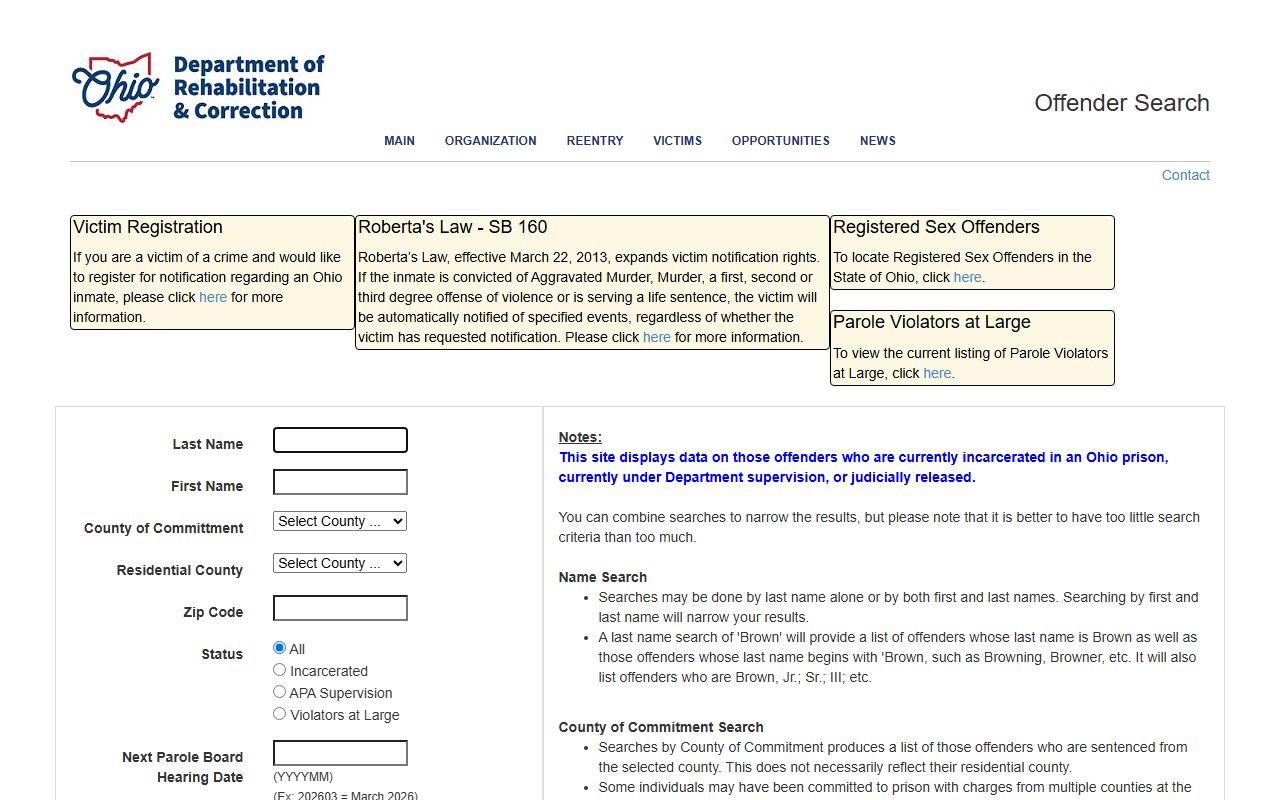
The ODRC Offender Search covers people sent to Ohio state prison from Toledo. It is free and public. Search by name or offender number. Filter by Lucas County to narrow results to the Toledo area. The database shows mugshots, sentence details, release dates, and supervision status. The Ohio DRC keeps this tool updated.
Toledo Municipal Court at 555 N. Erie Street handles misdemeanor cases. For felony cases, the Lucas County Common Pleas Court has jurisdiction. Both courts create case records that show charges, hearings, and outcomes. Court records tie directly to jail data for released inmates. The case disposition tells you what happened at the end.
Note: The city also runs "Engage Toledo" at 419-245-1000, a 24/7 service line that can direct you to the right office for public safety records.
Toledo Police Department
The Toledo Police Department is the main law enforcement agency for the city. Their phone is (419) 245-3340. The main office is at 525 N. Erie Street, Toledo, OH 43604. Officers make arrests and take people to the Lucas County Jail. The police department does not hold inmates long term.
| Agency | Toledo Police Department |
|---|---|
| Address | 525 N. Erie Street, Toledo, OH 43604 |
| Phone | (419) 245-3340 |
| Website | toledo.gov/police |
The City of Toledo government at 419-245-1000 can help with records requests and direct you to the right department. If you need a police report from a Toledo arrest, contact the police records division. These reports have arrest details that the jail booking record does not always include, like officer statements and evidence notes.
Ohio Laws on Toledo Released Inmates
Under ORC Section 5120.21, the Ohio DRC keeps a record for each state inmate. It shows name, age, sex, date of entry, and terms of discharge. The public can see the inmate's name, convictions, mugshot, supervision status, and where they have been held. These rules cover every Toledo released inmate who served time in a state prison.
The Public Records Act under ORC Section 149.43 lets anyone request government records in Ohio. You do not need to show ID or give a reason. Public offices must respond promptly. Copies come at cost. Medical records and security plans are exempt, but most jail and court records are open. Toledo residents can make records requests to the Lucas County Sheriff or the city government.
Parole and post-release control are defined in ORC Section 2967.01. A parolee stays under supervision until final release. Community control under ORC Section 2929.15 lets judges order up to five years of supervised release for felony offenders instead of prison. Both types of supervision show up in the ODRC system for Toledo released inmates.
Release Types in Toledo
Bond release is the most common way people leave the Lucas County Jail. They pay bail and go home until trial. Time served means the person completed their sentence. Transfer to state prison happens for felony convictions with long sentences. Each release type gets logged in the jail record.
Parole is a supervised release from state prison. Post-release control kicks in after a prison term ends. The Adult Parole Authority manages both for Toledo cases. Community control is a form of probation where the person stays in the community under strict rules. If they break those rules, they can go to prison. The ODRC search tracks parole and post-release control status. Jail releases show in the Lucas County system.
Toledo Inmate Notification
VINE lets you track an inmate in the Lucas County Jail or Ohio state prisons. Register with the person's name or booking ID. You get a call, text, or email when their status changes. VINE covers releases, transfers, and escapes. It is free and open to anyone.
For a statewide criminal background check, the Ohio Attorney General's BCI charges $22. You need the person's name, address, fingerprints, and consent. This provides a full criminal history across Ohio, not just Toledo cases. BCI has offices in London, Bowling Green, Richfield, and Youngstown.
Lucas County Released Inmates
Toledo is the county seat of Lucas County. All jail and court operations for Toledo run through Lucas County. Visit the county page for a full guide.
View Lucas County Released InmatesNearby Cities
These Ohio cities are near Toledo. Check them if you think an arrest may have happened in a different area.